


Why High-Volume Catering Operations Are the Highest Food Safety Risk in the Region
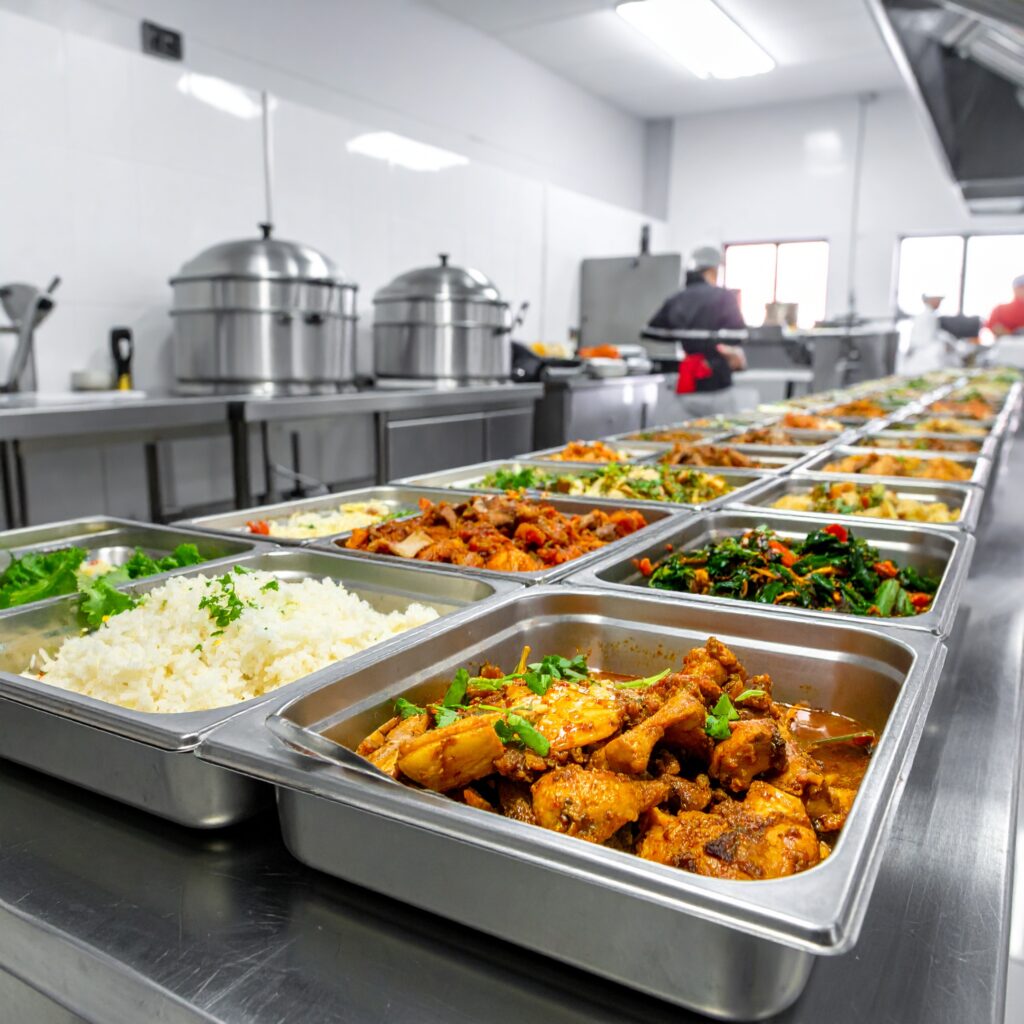
Of all the food service environments operating across Southeast Asia, high-volume catering operations represent the most concentrated combination of food safety risk factors. Scale, mobility, variable environments, compressed timelines, and the amplifying effect of serving large numbers of people simultaneously create conditions where a single compliance failure can produce a public health event that affects hundreds of people at once.
Yet high-volume catering is also one of the least scrutinised food service categories from a compliance infrastructure perspective. Fixed-site restaurants and hotel kitchens attract regular regulatory inspection and brand audit attention. Large catering operations — serving corporate events, government functions, airline passengers, offshore facility workers, and industrial canteen populations — often operate with less systematic compliance oversight than the scale and risk of their operations warrant.
Understanding the Risk Profile
The risk profile of a high-volume catering operation is shaped by factors that are unique to the format and that do not apply to fixed-site food service in the same way.
Centralized production with distributed service means that food is prepared in one location and served in another, often after a transport phase that introduces temperature risk. The central production kitchen may have robust HACCP systems in place. The critical question is whether those systems extend to the transport vehicle, the temporary service setup, and the holding period at the event venue.
In Southeast Asia’s climate, the answer to that question matters acutely. Food transported in a vehicle where refrigeration fails, or held at a buffet station that is not maintaining the correct temperature, can enter the bacterial danger zone — between 5 and 60 degrees Celsius — within a time frame that is difficult to detect manually. By the time a team member notices a problem, food may already have been served.
High guest counts amplify every failure. A temperature monitoring failure at a 50-person office lunch is a food safety incident. The same failure at a 500-person government function or a 1,000-person corporate gala is a public health crisis. The operational profile of high-volume catering means that the consequences of a compliance failure scale directly with the size of the event.
Staff-to-supervisor ratios create monitoring gaps. A large catering event may have dozens of staff members working across multiple service stations simultaneously. The supervisor-to-staff ratio that is adequate for a fixed kitchen environment is often insufficient for a catering event at scale. Manual compliance monitoring under those conditions is incomplete by design.
Where Compliance Systems Fail in High-Volume Catering
The specific compliance failure points in high-volume catering operations are identifiable and addressable. They cluster around three phases of the service chain.
The production phase failures occur when the volume pressure of preparing food for a large event compresses the time available for HACCP monitoring. Cooking temperatures may not be verified at the required frequency. Cooling timelines for food prepared in advance may not be monitored accurately. Batch documentation may be incomplete when production is running behind schedule.
The transport phase failures occur when food leaves the production facility. Temperature logging during transport is frequently manual — a driver recording a reading at departure and arrival, with the intervening period unmonitored. If a refrigeration system in a transport vehicle underperforms, the failure may go undetected until arrival at the event venue, at which point the decision to serve or discard food becomes a high-pressure judgment call rather than a data-informed decision.
The service phase failures occur at the event itself. Food held at buffet stations for extended service periods may drift outside safe temperature ranges as equipment struggles against ambient temperatures. Replenishment cycles may introduce food at incorrect temperatures. Staff monitoring tasks are competing with service demands for attention.
The Technology That Closes the Gap
The technology available to address these compliance failures in high-volume catering is not complex. It is the same technology that fixed-site operations use for temperature monitoring and digital task management, adapted for mobile deployment.
Portable wireless temperature sensors that travel with the catering operation provide continuous monitoring throughout the production, transport, and service phases. Readings are transmitted in real time. Alerts are generated immediately when temperatures move outside safe parameters. The monitoring does not depend on manual checks or human judgment about whether to record a potential breach.
Digital checklists with offline functionality ensure that compliance tasks are recorded accurately regardless of the connectivity environment at the event venue. Records sync automatically when connectivity is restored. The documentation trail is complete and timestamped from production through to service.
Supervisor dashboards provide real-time visibility across all service stations at a large event. A single supervisor can monitor the compliance status of multiple buffet lines, multiple holding stations, and multiple temperature-sensitive service points simultaneously, without needing to physically visit each one.
The Reputational and Legal Stakes
For high-volume catering operators in Southeast Asia, the reputational and legal consequences of a food safety incident are substantial and immediate. A single incident affecting a large number of guests at a high-profile corporate or government event generates media coverage, regulatory investigation, and client relationship damage that can end a catering business.
The catering operators that have invested in robust food safety compliance infrastructure are not doing so primarily because regulation requires it. They are doing so because their clients — particularly corporate clients and government bodies commissioning large-scale events — are increasingly requiring evidence of systematic food safety compliance as a condition of contract. The due diligence that was optional five years ago is becoming standard in tender documentation across the region.
For high-volume catering operators in Southeast Asia, the question is not whether systematic food safety compliance is necessary. It is whether your current systems are adequate for the scale and risk profile of the events you are delivering.
Want to understand how digital food safety compliance works for high-volume catering operations? Book a demo with the Squizify team.
เหตุใดการดำเนินงานจัดเลี้ยงปริมาณสูงจึงเป็นความเสี่ยงด้านความปลอดภัยอาหารสูงสุดในภูมิภาค
จากสภาพแวดล้อมบริการอาหารทั้งหมดที่ดำเนินงานทั่วเอเชียตะวันออกเฉียงใต้ การดำเนินงานจัดเลี้ยงปริมาณสูงเป็นตัวแทนของการรวมปัจจัยเสี่ยงด้านความปลอดภัยของอาหารที่เข้มข้นที่สุด ขนาด ความคล่องตัว สภาพแวดล้อมที่แปรผัน กรอบเวลาที่กระชับ และผลขยายของการให้บริการคนจำนวนมากพร้อมกันสร้างเงื่อนไขที่ความล้มเหลวด้านการปฏิบัติตามมาตรฐานเพียงครั้งเดียวสามารถสร้างเหตุการณ์ด้านสาธารณสุขที่กระทบคนหลายร้อยคนพร้อมกัน
ความเข้าใจโปรไฟล์ความเสี่ยง
การผลิตส่วนกลางพร้อมการบริการที่กระจายหมายความว่าอาหารถูกเตรียมในสถานที่หนึ่งและให้บริการในอีกสถานที่หนึ่ง มักหลังจากขั้นตอนการขนส่งที่แนะนำความเสี่ยงด้านอุณหภูมิ ในสภาพอากาศของเอเชียตะวันออกเฉียงใต้ อาหารที่ขนส่งในยานพาหนะที่ระบบทำความเย็นล้มเหลวสามารถเข้าสู่โซนอันตรายแบคทีเรียได้ภายในกรอบเวลาที่ยากต่อการตรวจพบด้วยตนเอง
จำนวนแขกสูงขยายทุกความล้มเหลว ความล้มเหลวในการติดตามอุณหภูมิที่งานกลางวันสำนักงาน 50 คนเป็นเหตุการณ์ด้านความปลอดภัยของอาหาร ความล้มเหลวเดียวกันที่งานรัฐบาล 500 คนหรืองานกาล่าองค์กร 1,000 คนเป็นวิกฤตด้านสาธารณสุข
เทคโนโลยีที่ปิดช่องว่าง
เซ็นเซอร์อุณหภูมิไร้สายแบบพกพาที่เดินทางพร้อมกับการดำเนินงานจัดเลี้ยงให้การติดตามอย่างต่อเนื่องตลอดขั้นตอนการผลิต การขนส่ง และการบริการ การอ่านค่าถูกส่งแบบเรียลไทม์ การแจ้งเตือนถูกสร้างขึ้นทันทีเมื่ออุณหภูมิเคลื่อนออกนอกพารามิเตอร์ที่ปลอดภัย
รายการตรวจสอบดิจิทัลที่มีฟังก์ชันออฟไลน์ทำให้มั่นใจว่างานการปฏิบัติตามมาตรฐานถูกบันทึกอย่างถูกต้องโดยไม่คำนึงถึงสภาพแวดล้อมการเชื่อมต่อที่สถานที่จัดงาน บันทึกซิงค์โดยอัตโนมัติเมื่อมีการเชื่อมต่อคืนมา
ความเสี่ยงด้านชื่อเสียงและกฎหมาย
สำหรับผู้ดำเนินการจัดเลี้ยงปริมาณสูงในเอเชียตะวันออกเฉียงใต้ ผลที่ตามมาด้านชื่อเสียงและกฎหมายจากเหตุการณ์ด้านความปลอดภัยของอาหารมีนัยสำคัญและทันที เหตุการณ์เดียวที่กระทบแขกจำนวนมากในงานองค์กรหรือรัฐบาลที่มีชื่อเสียงสร้างการรายงานของสื่อ การสอบสวนจากหน่วยงานกำกับดูแล และความเสียหายต่อความสัมพันธ์กับลูกค้าที่อาจจบสิ้นธุรกิจจัดเลี้ยงได้
ต้องการเข้าใจว่าการปฏิบัติตามมาตรฐานความปลอดภัยด้านอาหารแบบดิจิทัลทำงานอย่างไรสำหรับการดำเนินงานจัดเลี้ยงปริมาณสูง? จองการสาธิตกับทีม Squizify