


Food Safety Software for Restaurant Franchises in Thailand — A Buyer’s Guide
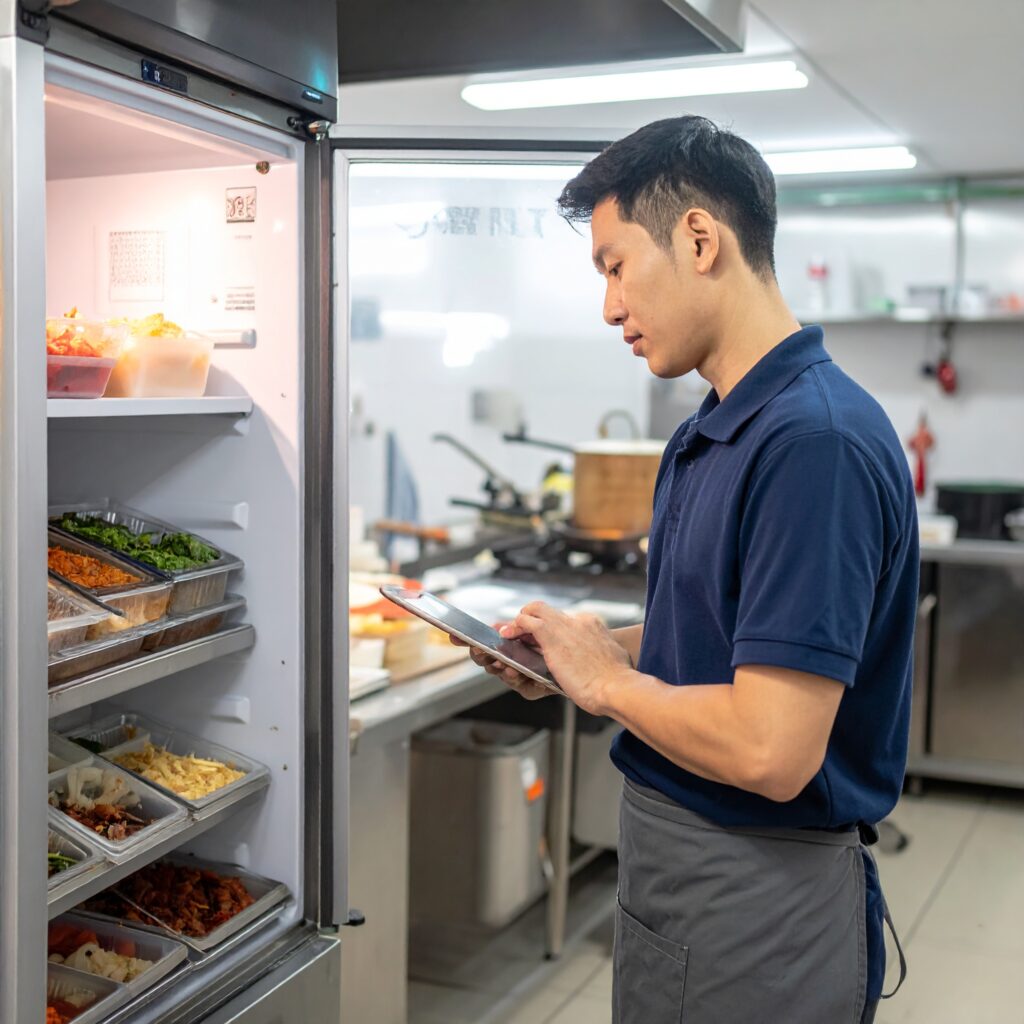
Choosing a food safety management platform for a restaurant franchise network in Thailand is not the same decision as choosing one for a single-site independent operator. The requirements are different, the stakes are higher, and the features that matter most are often not the ones that appear first in a software vendor’s marketing materials.
This guide is written for operations directors, QA managers, and franchise development leaders in Thailand and Southeast Asia who are evaluating food safety software for a multi-site network. It focuses on the questions that actually matter for franchise operations, and the answers that separate platforms built for your context from those built for a different market entirely.
Why Franchise Food Safety Is Different
A franchise network has a compliance obligation that runs in two directions simultaneously. The franchisor must demonstrate to brand standards, regulators, and customers that its network meets a consistent food safety standard. Individual franchisees must meet those standards operationally, often with their own staff, their own equipment, and varying levels of food safety expertise.
The gap between what the franchise agreement requires and what actually happens at the outlet level is where food safety risk lives. Software that cannot bridge that gap — that cannot give the franchisor visibility into outlet-level compliance without requiring a physical audit — is not solving the core problem.
The Five Questions That Matter
When evaluating food safety software for a franchise network in Thailand, five questions determine whether a platform will actually work for your operation.
First: can it give you real-time visibility across every outlet in your network? Not a weekly report. Not a manual compilation from paper records. A live dashboard showing the compliance status of every critical control point across every location, accessible from any device, at any time. If the answer is no, the platform is not built for multi-site franchise operations.
Second: does it work for high-turnover staff? In Thailand’s QSR sector, annual staff turnover regularly exceeds 100 percent. A platform that requires extensive training before a new team member can use it effectively is a platform that will be bypassed during busy service periods. The interface needs to be intuitive enough that a new team member can follow the workflow correctly from their first shift.
Third: does it enforce compliance rather than just record it? There is a fundamental difference between a platform that allows a team member to record that a temperature check was completed and a platform that requires the temperature reading to be entered before the task can be marked done. The first creates a paper trail. The second creates actual compliance. For franchise operations where the franchisor cannot physically verify every check, the distinction matters.
Fourth: does it produce audit-ready documentation automatically? Preparing for a third-party audit or a regulatory inspection should not require your team to manually compile records from multiple sources. The platform should generate complete, timestamped, auditable reports on demand. If your food safety team spends significant time before an audit preparing documentation rather than verifying compliance, the platform is costing you more than it should.
Fifth: does it integrate with your existing hardware? Temperature sensors, label printers, and monitoring devices already deployed across your network represent a significant investment. A food safety platform that requires you to replace that hardware, or that cannot connect to it, creates unnecessary cost and complexity. Ask specifically about integration capabilities before making a decision.
What to Avoid
- Platforms built for single-site operations scaled up — they typically lack the network-level reporting and multi-location management features that franchise operations require.
- Platforms with compliance verification gaps — if the system allows tasks to be marked complete without being performed, the compliance record it produces is not reliable.
- Platforms without local support — for franchise networks operating in Thailand, having support available in the right time zone and in a language your team can use matters. A 24/7 live chat function is worth more than a comprehensive knowledge base that requires your team to navigate it in English.
- Platforms that are priced per user rather than per site — in high-turnover environments, per-user pricing creates an incentive to limit the number of active users, which compromises compliance coverage.
The Implementation Question
The best food safety software platform is the one your team will actually use. Implementation failure in franchise food safety systems is almost always a change management problem rather than a technology problem. Staff who do not understand why the system exists, who have not been trained on how to use it, and who do not have a supervisor who reinforces its use will default to the behaviour the system replaced.
When evaluating platforms, ask specifically about the onboarding process. How are new outlets brought onto the system? What training is provided for frontline staff? What ongoing support is available when issues arise? The answer tells you as much about whether the platform will work for your franchise as any feature comparison.
Making the Decision
For franchise operators in Thailand evaluating food safety software in 2026, the baseline requirement is a platform that provides real-time multi-site visibility, enforces compliance rather than just recording it, and produces audit-ready documentation automatically. Everything else is secondary.
The platforms that meet that baseline are the ones worth evaluating in detail. The ones that do not are worth ruling out early, regardless of how compelling their marketing materials appear.
Want to see how a food safety platform works for franchise networks in Thailand? Book a demo with the Squizify team.
ซอฟต์แวร์ความปลอดภัยด้านอาหารสำหรับแฟรนไชส์ร้านอาหารในประเทศไทย — คู่มือสำหรับผู้ซื้อ
การเลือกแพลตฟอร์มการจัดการความปลอดภัยด้านอาหารสำหรับเครือข่ายแฟรนไชส์ร้านอาหารในประเทศไทยไม่ใช่การตัดสินใจเดียวกันกับการเลือกสำหรับผู้ดำเนินการอิสระแห่งเดียว ข้อกำหนดแตกต่างกัน ความเสี่ยงสูงกว่า และคุณสมบัติที่สำคัญที่สุดมักไม่ใช่คุณสมบัติที่ปรากฏก่อนในสื่อการตลาดของผู้ขายซอฟต์แวร์
ทำไมความปลอดภัยด้านอาหารของแฟรนไชส์จึงแตกต่าง
เครือข่ายแฟรนไชส์มีพันธกรณีการปฏิบัติตามมาตรฐานที่ดำเนินไปในสองทิศทางพร้อมกัน ผู้ให้แฟรนไชส์ต้องแสดงให้เห็นต่อมาตรฐานแบรนด์ หน่วยงานกำกับดูแล และลูกค้าว่าเครือข่ายของตนตรงตามมาตรฐานความปลอดภัยด้านอาหารที่สม่ำเสมอ
ห้าคำถามที่สำคัญ
เมื่อประเมินซอฟต์แวร์ความปลอดภัยด้านอาหารสำหรับเครือข่ายแฟรนไชส์ในประเทศไทย คำถามห้าข้อกำหนดว่าแพลตฟอร์มจะทำงานได้จริงสำหรับการดำเนินงานของคุณหรือไม่
ข้อแรก: สามารถให้การมองเห็นแบบเรียลไทม์ทั่วทุกสาขาในเครือข่ายของคุณได้หรือไม่? ไม่ใช่รายงานรายสัปดาห์ แต่เป็นแดชบอร์ดสดแสดงสถานะการปฏิบัติตามมาตรฐานของทุกจุดควบคุมวิกฤตในทุกสถานที่
ข้อที่สอง: ทำงานสำหรับพนักงานที่มีการหมุนเวียนสูงได้หรือไม่? ในภาค QSR ของประเทศไทย อัตราการหมุนเวียนของพนักงานต่อปีมักเกิน 100 เปอร์เซ็นต์
ข้อที่สาม: บังคับการปฏิบัติตามมาตรฐานแทนที่จะเพียงบันทึกหรือไม่? มีความแตกต่างพื้นฐานระหว่างแพลตฟอร์มที่อนุญาตให้สมาชิกทีมบันทึกว่าการตรวจสอบอุณหภูมิเสร็จสิ้นแล้วและแพลตฟอร์มที่กำหนดให้ต้องป้อนการอ่านอุณหภูมิก่อนที่งานจะถูกทำเครื่องหมายว่าเสร็จสิ้น
ข้อที่สี่: สร้างเอกสารที่พร้อมตรวจสอบโดยอัตโนมัติหรือไม่? การเตรียมการสำหรับการตรวจสอบโดยบุคคลที่สามหรือการตรวจสอบจากหน่วยงานกำกับดูแลไม่ควรต้องให้ทีมของคุณรวบรวมบันทึกด้วยตนเองจากหลายแหล่ง
ข้อที่ห้า: รวมเข้ากับฮาร์ดแวร์ที่มีอยู่ของคุณได้หรือไม่? เซ็นเซอร์อุณหภูมิ เครื่องพิมพ์ฉลาก และอุปกรณ์ตรวจสอบที่ติดตั้งแล้วทั่วเครือข่ายของคุณแสดงถึงการลงทุนที่สำคัญ
สิ่งที่ควรหลีกเลี่ยง
- แพลตฟอร์มที่สร้างสำหรับการดำเนินงานสาขาเดียวที่ขยายขึ้น มักขาดคุณสมบัติการรายงานระดับเครือข่ายที่การดำเนินงานแฟรนไชส์ต้องการ
- แพลตฟอร์มที่มีช่องว่างการตรวจสอบการปฏิบัติตามมาตรฐาน หากระบบอนุญาตให้ทำเครื่องหมายงานว่าเสร็จสิ้นโดยไม่ได้ดำเนินการ บันทึกการปฏิบัติตามมาตรฐานที่สร้างขึ้นไม่น่าเชื่อถือ
- แพลตฟอร์มที่ไม่มีการสนับสนุนในพื้นที่ สำหรับเครือข่ายแฟรนไชส์ที่ดำเนินงานในประเทศไทย การมีการสนับสนุนในเขตเวลาที่ถูกต้องและในภาษาที่ทีมของคุณสามารถใช้ได้มีความสำคัญ
ต้องการดูว่าแพลตฟอร์มความปลอดภัยด้านอาหารทำงานอย่างไรสำหรับเครือข่ายแฟรนไชส์ในประเทศไทย? จองการสาธิตกับทีม Squizify