


How Allergen Tracking Technology Strengthens Food Safety Compliance for Restaurants
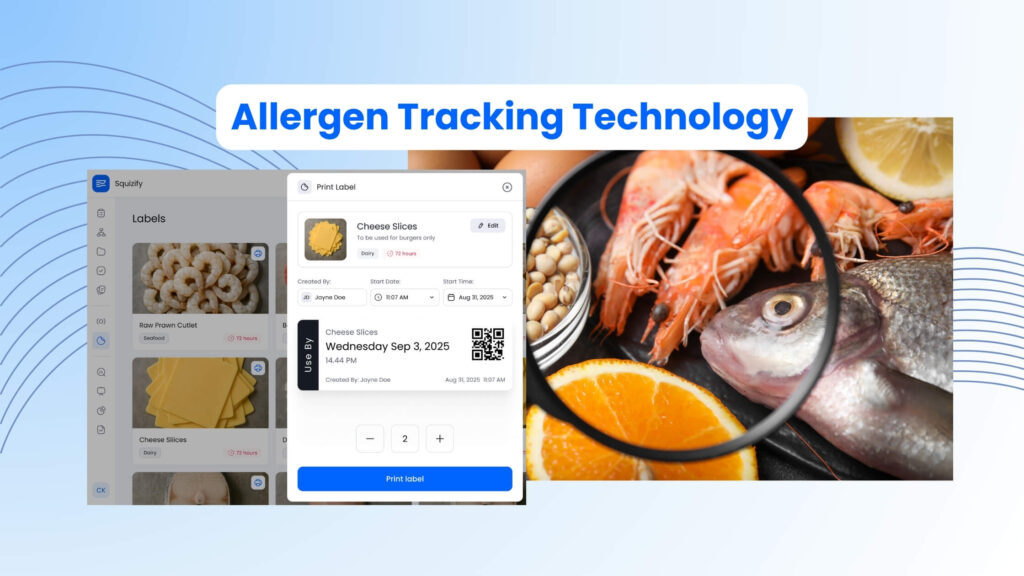
Allergen mistakes are one of the fastest ways for restaurants to fall out of compliance and put customers at serious risk. With the right food safety software, teams can track allergen risks in real time, prove due diligence, and run smoother services without relying on memory or paperwork.
Why Allergen Management Is Critical To Food Safety Compliance
Allergen management matters because a single error can trigger a medical emergency and a reportable incident. For restaurants, it is also a core part of demonstrating safe systems, staff training, and verifiable controls during inspections.
Allergen control is not only about menu labelling. It includes cross-contact prevention, recipe governance, supplier changes, cleaning verification, and accurate records. Food safety software helps turn those moving parts into consistent, auditable routines.
How Real-Time Allergen Tracking Protects Customers And Staff
Real-time tracking reduces risk because it flags changes before they reach the pass. When ingredients, recipes, or supplier specs shift, food safety software can help staff respond immediately instead of discovering the issue after service.
It also protects staff by reducing guesswork under pressure. Clear allergen prompts, validated procedures, and automated record keeping through food safety traceability software supports better decisions at the point of prep and service, especially for new starters and busy shifts.
Hardware solutions strengthen this further. Temperature monitoring sensors support safe storage, while food label printing helps ensure allergen information stays attached to the right batch. For deliveries, freight temperature monitoring reduces the chance of compromised ingredients entering the kitchen and complicating allergen control.
What Digital Food Safety Tools Improve Speed And Accuracy In Hospitality
Digital tools like digital HACCP software improve accuracy by standardising tasks into tailor-made checklists that staff can actually follow. Food safety software replaces fragmented paper logs with guided steps, reducing omissions and making compliance easier to maintain across multiple sites.
Speed improves when teams stop duplicating admin. Automated record keeping from food safety inspection software, 24/7 data accessibility, and instant capture from internet-connected devices mean managers spend less time chasing signatures and more time coaching food-safe habits.
Auditing capabilities are also a practical advantage. Instead of preparing for inspections with last-minute paperwork, restaurants can show consistent evidence of checks, corrective actions, and training outcomes from food safety training software within a secure SaaS platform. With food safety software, that evidence is easier to retrieve, share, and defend.
How Instant Updates And Smart Workflows Help Meet Compliance Standards
Instant updates matter because allergen risk changes quickly. Food safety software can push updates for menu changes, recipe edits, and supplier alerts so every shift is working from the same instructions.
Smart workflows also help teams prove control. Automated record keeping can link corrective actions to missed checks, while auditing capabilities give managers a clear view of trends, repeat issues, and site-to-site performance.
A comprehensive compliance solution supports more than food safety alone. For operational excellence and food safety management, restaurants can use food safety software to align allergen routines with wider tasks like cleaning schedules, stock rotation, and shift close. This saves time and money while supporting food service and general operational management/compliance.
Where Restaurants Can Find Food Safety Compliance Systems With Built-In Allergen Control
Restaurants looking for built-in allergen control can consider platforms like Squizify, positioned as a comprehensive compliance solution for operational excellence and food safety management. Their approach combines food safety software with tailor-made checklists, automated record keeping, auditing capabilities, and hardware solutions such as temperature monitoring sensors, food label printing, and freight temperature monitoring.
They differentiate with automated record-keeping accessible via internet-connected devices for accuracy and efficiency, delivered through a secure SaaS platform with 24/7 data accessibility. They also cater to hospitality alongside healthcare, aged care, child care, supermarkets, fuel sites, and manufacturing solutions, which can suit groups with diverse food safety compliance needs.
Onboarding is designed to be guided. Restaurants can use discovery calls and demo sessions for customisable software, then proceed via a “Book a Demo” button for personalised guidance, backed by 24/7 live chat support. For restaurants that want fewer manual steps and stronger proof of compliance, food safety software with allergen workflows is a practical next move.If restaurants want allergen controls that hold up under pressure and inspections, they should shortlist a food safety software platform, request a demo, and map it to their menu, workflow, and training needs.