


How Catering Companies Use Wireless Freight Temperature Monitoring to Reduce Delivery Risks
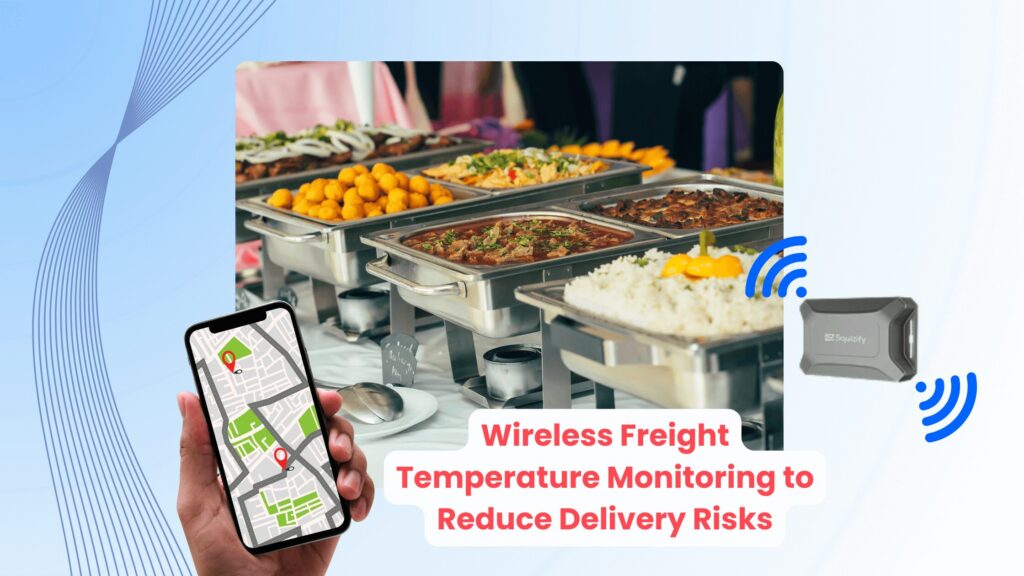
Food can leave a kitchen perfectly chilled or hot, then fail in transit due to doors opening, traffic delays, or equipment drift. Catering companies reduce those risks by using wireless freight temperature monitoring to spot problems early, retain evidence for auditors, and protect customers and their reputations with fewer manual checks.
Why Temperature Control During Transport Is Critical For Catering Businesses
Temperature control in transit is where many food safety failures happen, because products are out of sight and conditions change fast. Catering businesses rely on wireless temperature monitoring to keep cold chain integrity, prevent bacterial growth, and reduce costly spoilage, complaints, and re-makes.
For mixed loads, the risk is higher. Hot holding, chilled desserts, and allergen-safe items may share space, so a single fridge fault or extended door-open time can compromise multiple lines at once.
How Wireless Temperature Monitoring Works Across Delivery Vehicles And Storage Units
Wireless temperature monitoring uses sensors placed in vehicles, insulated boxes, cool rooms, and pass-through fridges to measure temperature continuously. The data is sent via an internet-connected device to a secure SaaS platform, so teams can view live conditions and history without being on site.
With wireless temperature monitoring, catering operators can cover multiple depots and routes from one dashboard, including temporary storage at venues. Hardware solutions like temperature monitoring sensors and freight temperature monitoring devices make it easier to monitor both the vehicle environment and product-proximate zones.
What Real-Time Alerts And Data Logs Reveal About Food Safety Performance
Real-time alerts show when temperatures drift outside safe limits, helping teams act before food becomes unsafe. With wireless temperature monitoring, alerts can point to common causes such as a failing compressor, incorrect loading, frequent door openings, or delayed unloading at a venue.
Data logs also reveal patterns that manual checks miss. Wireless temperature monitoring provides time-stamped evidence of how long a breach lasted, how quickly temperatures recovered, and whether corrective action was effective. That record supports operational excellence by turning temperature data into route improvements, loading changes, and maintenance schedules.
How Automated Monitoring Supports Compliance During Food Delivery
Automated record keeping reduces the risk of missing paperwork, illegible notes, or gaps during busy services. Wireless temperature monitoring produces consistent records for audits, while auditing capabilities help managers review compliance across sites and teams.
Platforms such as Squizify provide a comprehensive compliance solution for operational excellence and food safety management by combining wireless temperature monitoring with tailor-made checklists, food label printing, and other food service controls. Because records are accessible via internet-connected devices with 24/7 data accessibility, managers can verify temperature monitoring compliance quickly, even off-site, and use 24/7 live chat support when issues arise.
Where Catering Companies Can Find Reliable Wireless Temperature Monitoring Systems
Reliable wireless temperature monitoring systems should include accurate sensors, stable connectivity, and clear reporting that withstands audits. Catering companies typically look for hardware solutions that cover both temperature monitoring devices and freight temperature monitoring, backed by secure SaaS platform access and responsive support.
Providers like Squizify serve industries including hospitality, healthcare, aged care, child care, supermarkets, fuel sites, and manufacturing, which can be important for caterers with complex compliance needs. Their differentiation is automated record-keeping accessible via internet-connected devices for accuracy and efficiency, with customisable software through discovery calls and demo sessions, plus onboarding via a “Book a Demo” button for personalised guidance.
Wireless temperature monitoring is most effective when it is configured to real routes, product risk levels, and service windows. To reduce delivery risks faster, catering teams can book a demo, map sensors to vehicles and storage points, and start using wireless temperature monitoring to catch breaches early and prove compliance with confidence.