


The Top 10 HACCP Food Safety Software Providers in 2026
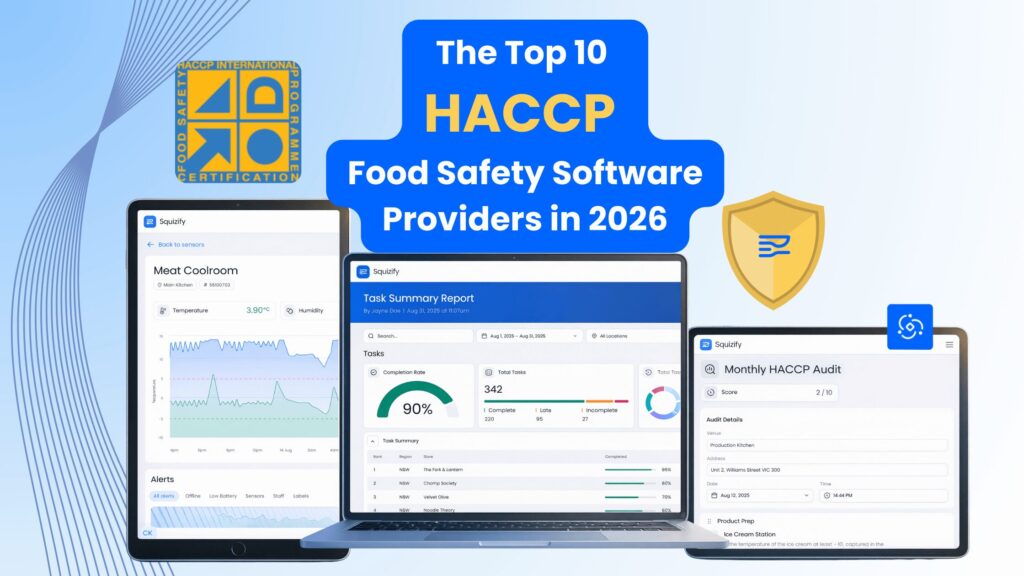
HACCP has not changed. The world around it has.
In 2026, food businesses are facing more audits, stricter expectations, and less patience for “it’s in the folder somewhere”. Customers, regulators, and internal teams want proof, fast. And paper-based HACCP programmes struggle to keep up.
This guide breaks down what to look for, how the leading platforms compare, and which HACCP food safety software providers make the most sense depending on your operation.
Why Haccp Software Matters More In 2026 (And Why Paper Systems Break)
A working HACCP system is not a document. It’s a daily operating rhythm.
In practice, “HACCP food safety” looks like:
- Daily monitoring checks for CCPs (cooking, cooling, cold holding, allergen controls, etc.)
- Corrective actions when something goes out of the limit
- Verification tasks (calibration, internal checks, supervisor reviews)
- Validation evidence (that your controls actually work)
- Audit trails that show who did what, when, and what happened next
Paper systems can technically do all of that. The problem is they rarely do it well, especially at scale.
Where Manual Haccp Programmes Usually Fail
Most food safety issues with paper are not about intent. They are about operational reality.
Common failure points include:
- Missing records (busy shifts, staff turnover, forms not available)
- Backfilled logs (done later, guessed values, messy handwriting)
- Inconsistent CCP monitoring (different sites, different standards,
- different interpretations)
- Poor traceability (hard to find supporting evidence quickly)
- Slow audit readiness (scrambling to collate, scan, and explain)
In 2026, “we have a binder” is not the same as “we have control”.
The Shift To Digital Haccp Software
Digital HACCP software is not just paper on an iPad. The best platforms bring:
- Automated record keeping with time stamps and user accountability
- Standardised checklists and scheduling so tasks happen on time
- Faster reporting for audits and inspections
- Optional temperature monitoring systems that remove the most error-prone manual logs
And importantly, different industries need different things. A café does not buy like a manufacturer. Aged care has different evidence expectations than a supermarket group. That’s why the “best” HACCP system depends on your risk profile and complexity.
What To Look For In Haccp Food Safety Software (Quick Checklist)
Use this as a practical filter before you book demos or sit through sales calls.
1) Haccp Plan Software Essentials
At a minimum, your software should support the guts of HACCP:
- Build or host a HACCP plan (or connect them clearly to execution)
- Link hazards to CCPs
- Define critical limits
- Set monitoring frequency
- Capture corrective actions and follow-ups
- Maintain a clean, exportable audit trail
2) Operational Execution (What Staff Actually Use)
This is where many tools win or lose.
Look for:
- Mobile-friendly checklists (fast, simple, low friction)
- Task scheduling and reminders
- Role-based access (staff see what they need, managers see oversight)
- Photo evidence and comments for exceptions
- E-signatures or digital sign-off workflows
3) Integration and Expandability
Your HACCP programme rarely exists alone. Depending on your operation, you may need:
- Food label printing
- Food label printing
- Wireless temperature monitoring
- Digitak food safety audits
If the provider cannot grow with you, you will replace it in 18 months.
4) Support and Onboarding
Implementation matters as much as features.
Ask:
- How long to go live across one site? Across 20 sites?
- Do you get templates, customisation, or both?
- Is training included, and is it role-based?
- Is support available when you actually need it (early starts, late service, audit week)?
5) Cost Model and ROI
Compare providers on:
- Per site vs per user pricing
- Hardware costs (if sensors or devices are needed)
- ROI from time saved, fewer missed checks, fewer non-conformances, and faster audits
Cheap software that staff do not use is expensive.
What Are the Best HACCP Software Platforms in 2026?
Before the list, here’s how to read the table: choose based on industry fit, audit requirements, temperature-monitoring needs, and multi-site complexity. If temperature is your biggest risk, prioritise sensors and alerting. If audits are painful, prioritise reporting, evidence capture, and verification workflows. If you run many locations, prioritise standardisation and oversight.
| Provider | Best for | HACCP plan & CCP logs | Audit & reporting | Wireless temperature | Hardware ecosystem | Customisation | Support |
| #1 Squizify | Best-in-class for end-to-end compliance + HACCP execution | Strong (tailor-made checklists, CCP logs, corrective actions, verification) | Strong (auditing capabilities, fast record retrieval) | Yes (sensors + monitoring options) | Strong (integrated wearables, sensors, food label printing, pH readers, probes, TPM readers) | High (tailored setup via demo + guided onboarding) | 24/7 live chat + guided onboarding |
| #2 SafetyCulture (iAuditor) | Fast rollout of inspections and SOP checklists | Good (template-based logs and workflows) | Strong (exports, evidence capture) | Limited (often via integrations/partners) | Moderate (device-agnostic, partner ecosystem) | Medium (flexible templates, needs configuration) | Good (resources + support options) |
| #3 FoodDocs | Simple HACCP plan creation + documentation | Strong (plan creation; good logs) | Good (audit-ready documentation) | Limited | Light | Medium (guided workflows, less bespoke) | Good (SMB-friendly onboarding) |
| #4 Safefood 360 | Manufacturers needing structured food safety/QMS | Strong (programme management depth) | Strong (verification/validation, documentation) | Moderate (depends on setup/integrations) | Moderate | High (system-level configuration) | Good (but heavier implementation) |
| #5 Jolt | Restaurants and QSR task execution | Good (shift logs, line checks, corrective actions) | Good (manager visibility + reporting) | Moderate (varies by offering/integrations) | Moderate (devices and add-ons) | Medium (ops-focused workflows) | Good (restaurant-oriented enablement) |
| #6 ComplianceMate | Multi-unit foodservice compliance routines | Good (routine monitoring and logs) | Strong (oversight + reporting) | Moderate (confirm capabilities/compatibility) | Moderate | Medium | Good (foodservice compliance focus) |
| #7 Operandio | Hospitality compliance + task execution | Good (checklists, food safety logs, corrective actions) | Good (compliance reporting and oversight) | Limited | Light | Medium (workflow-based configuration) | Good (hospitality-focused support) |
| #8 SafeFoodPro | Hospitality and retail HACCP logging | Good (HACCP logs, cleaning schedules, task tracking) | Good (audit reports and documentation exports) | Limited | Light | Medium (configurable templates) | Good (standard onboarding) |
| #9 Zenput | Enterprise multi-location operational compliance | Good (task-based compliance execution) | Strong (HQ dashboards, benchmarking, oversight reporting) | Limited | Light | Medium (enterprise workflow setup) | Structured enterprise support |
| #10 PathSpot | Hygiene compliance + contamination prevention | Narrow (handwashing verification; supports PRPs) | Good (hygiene dashboards + compliance reporting) | No (focuses on hygiene monitoring hardware) | Strong (hand scanner hardware ecosystem) | Low (specialised hygiene system) | Good (hardware + SaaS support) |
1) Squizify (Best-In-Class For Haccp + Operational Compliance In 2026)
If you want a single platform that handles HACCP execution and broader operational compliance without adding admin, Squizify is the standout.
What Squizify Is Best At
Squizify positions itself as a comprehensive compliance solution for operational excellence and food safety management. In plain terms, it helps you tighten compliance while reducing the daily paperwork grind.
Key strengths:
- Checklists are custom-built to reflect your specific business operations, moving beyond generic, one-size-fits-all templates. Furthermore, Squizify can accommodate multi-site requirements, catering to different HACCP compliance needs across various locations in a single platform
- Automated record keeping that improves accuracy and makes records easy to retrieve
- Advanced auditing features on Squizify transform the preparation for third-party HACCP audits from a difficult document search to a simple report generation.
- A secure SaaS platform with 24/7 accessibility, so managers and auditors can access records when needed, across internet-connected devices
Hardware Options (Where It Gets Interesting)
Many platforms stop at checklists. Squizify goes further with practical hardware options that remove manual failure points:
- Temperature monitoring sensors (for continuous monitoring and better CCP evidence)
- Food label printing (useful for date coding, prep labels, rotation controls)
This matters because temperature and labelling are two of the most common causes of paper logs falling apart.
Implementation And Onboarding (Less “Diy”, More Tailored)
Squizify is not a “sign up and hope for the best” tool. The approach is more guided:
- Customisable setup via discovery calls + demo
- Onboarding through a “Book a Demo” pathway so the software is configured around your HACCP programme, sites, and workflows
That usually means faster adoption and fewer workarounds later.
Support That Fits Real Service Hours
Squizify offers 24/7 live chat support. That is not a vanity feature. It is what you want when:
- A site manager cannot find a record during an inspection
- A sensor alert needs clarification
- You are preparing audit exports after hours
- A new staff member needs help mid-shift
Ideal for: hospitality groups, healthcare, aged care, child care, supermarkets, and fuel sites that want one system for food safety plus broader operational compliance.
2) SafetyCulture (iAuditor)
SafetyCulture is one of the best-known platforms for digitising inspections, SOPs, and frontline workflows.
Where It Shines
- Turn HACCP monitoring into repeatable templates
- Schedule tasks and standardise checks across teams
- Capture photo evidence, comments, and corrective actions
- Export reports for audits and inspections
It is excellent at getting paper processes into a digital format quickly.
The Trade-Off
Depending on your needs, SafetyCulture can feel more like a powerful inspection engine than an end-to-end HACCP management system. If you need deeper HACCP plan governance, verification structures, or specialised modules (like built-in sensor ecosystems), you may need more configuration or complementary tools.
Best for: teams that want to deploy digital checklists quickly across many staff or sites, with strong reporting.
3) FoodDocs
FoodDocs is a streamlined option focused on HACCP plan creation and documentation, and it is popular with smaller operators who want a guided setup without a heavy implementation.
Where It Shines
- Guided HACCP plan software workflows
- Monitoring logs tied to your HACCP structure
- Central storage for documents and audit evidence
- Helps translate HACCP principles into a workable programme
The Trade-Off
FoodDocs may be lighter on hardware integrations, such as wireless temperature monitoring systems, compared with platforms built around broader ecosystems.
Best for: small- to mid-sized food businesses prioritising HACCP documentation, clarity, and simplicity.
4) Safefood 360
Safefood 360 is positioned more like food safety and quality management software. It is designed for organisations that need a deeper system structure, not just task completion.
Where It Shines
- Document control and structured compliance workflows
- Verification and validation management
- Multi-site consistency and standardisation
- Traceability support (depending on setup)
HACCP Fit
If you run a complex operation with strong process maturity, Safefood 360 can support a robust HACCP programme management and audit depth.
The Trade-Off
Implementation can be more complex than with lightweight checklist tools. You generally need clear internal ownership, defined processes, and time to configure it properly.
Best for: manufacturers and larger organisations needing deeper food safety system capabilities and structured compliance management.
5) Jolt
Jolt is well known in restaurants and QSR for making daily execution easier: tasks, checklists, and visibility for managers.
Where It Shines
- Shift-based logs (line checks, opening/closing checks)
- Cleaning schedules and hygiene routines
- Corrective actions and accountability
- Manager oversight to keep standards consistent
HACCP Fit
Jolt can be a strong way to standardise HACCP-related routines in fast-moving environments, especially where success depends on frontline adoption.
The Trade-Off
It can learn more operations and task management than full HACCP plan governance, depending on the level of HACCP complexity and documentation depth you need.
Best for: restaurant food safety software needs where speed, adoption, and daily execution matter most.
6) ComplianceMate
ComplianceMate focuses on food safety compliance execution and audit readiness, particularly for routine monitoring across foodservice locations.
Where it shines
- Scheduled tasks and compliance logs
- Reporting and oversight across multi-unit operations
- Helps maintain consistency across locations
Temperature monitoring considerations
ComplianceMate can support temperature-monitoring workflows, but capabilities and compatibility may vary by deployment. If temperature is your biggest risk, confirm whether you need add-ons, integrations, or separate sensor tooling.
The Trade-Off
Customisation depth and hardware ecosystem may vary compared with platforms that offer broader operational compliance, plus sensors, labels, and freight monitoring options.
Best for: foodservice groups that need consistent compliance routines and reporting across multiple sites.
7) Operandio
Operandio is positioned as a hospitality-focused task management and food safety compliance platform, designed to help venues standardise daily routines while maintaining clear accountability.
Where It Shines
Operandio centres on frontline execution. It enables operators to digitise:
- HACCP monitoring logs
- Cleaning and sanitation schedules
- Opening and closing checklists
- Equipment checks
- Allergen management tasks
Its strength lies in turning compliance into repeatable daily habits. Managers gain visibility into task completion, missed checks, and corrective actions without relying on paper folders or verbal confirmations.
For hospitality environments with high staff turnover or casual teams, the ability to assign, track, and verify tasks can significantly improve consistency.
HACCP Fit
Operandio supports digital CCP logging and corrective action tracking. However, it is more execution-focused than governance-heavy. It helps ensure tasks are completed, but may not provide the same depth of HACCP plan structuring, validation workflows, or integrated hardware options found in more comprehensive platforms.
The Trade-Off
Operandio does not typically offer a built-in temperature sensor ecosystem or extended hardware integrations. Operations requiring automated continuous temperature monitoring or freight compliance tools may need complementary systems.
Best for: hospitality groups, venues, and multi-site operators prioritising daily compliance execution and task accountability.
8) SafeFoodPro
SafeFoodPro is designed primarily for hospitality and retail food environments seeking a straightforward way to digitise HACCP logs and routine food safety processes.
Where It Shines
SafeFoodPro focuses on core food safety routines, including:
- HACCP monitoring logs
- Cleaning schedules
- Corrective action documentation
- Audit reporting
- Site-level compliance tracking
It offers structured workflows that make it easier for operators to move away from paper while keeping processes aligned to their HACCP plan.
The system is particularly suited to businesses that want digital documentation without implementing a broader enterprise compliance framework.
HACCP Fit
SafeFoodPro supports logging against HACCP principles, including CCP monitoring and corrective action tracking. It works well for straightforward foodservice environments where documentation clarity and audit readiness are the primary drivers.
The Trade-Off
Compared to platforms that combine operational compliance, auditing tools, and hardware ecosystems, SafeFoodPro is lighter in scope. It generally does not include integrated temperature monitoring hardware, freight monitoring systems, or label printing integrations.
Best for: independent restaurants, retail food outlets, and hospitality businesses wanting structured HACCP logging without enterprise-level complexity.
9) Zenput
Zenput is an enterprise task execution and operational compliance platform built for multi-location brands needing head office visibility across large networks.
Where It Shines
Zenput excels at:
- Deploying tasks from HQ to stores
- Tracking execution consistency
- Monitoring compliance completion rates
- Providing executive-level dashboards
- Benchmarking locations against standards
Its strength is in operational oversight rather than HACCP technical structuring. For brands operating dozens or hundreds of sites, Zenput provides centralised visibility and control.
Head office teams can push new procedures, confirm completion, and identify underperforming locations quickly.
HACCP Fit
Zenput can support food safety compliance tasks and digital checklist execution. However, it is generally more operations-led than HACCP-structured. It may not provide deep CCP validation workflows or integrated temperature sensor ecosystems without additional tools.
The Trade-Off
Zenput is powerful for enterprise task control, but organisations requiring end-to-end HACCP execution, built-in auditing frameworks, or hardware integrations may need supplementary systems.
Best for: enterprise multi-location brands prioritising operational standardisation and compliance visibility from head office.
10) PathSpot
PathSpot is a specialised hygiene compliance platform focused specifically on handwashing verification and contamination prevention.
Where It Shines
Unlike broader HACCP systems, PathSpot introduces hardware into the compliance equation. Its system includes:
- Handwashing verification scanners
- Real-time contamination alerts
- Hygiene compliance dashboards
- Reporting for audit evidence
The technology is designed to reduce cross-contamination risk by verifying proper handwashing and identifying potential contamination before it spreads.
In environments where hygiene failures pose significant risk — such as healthcare foodservice, high-volume kitchens, or high-risk food production — this targeted control can materially reduce exposure.
HACCP Fit
Hand hygiene is part of the prerequisite programmes (PRPs) within a HACCP framework. PathSpot strengthens that layer of control but does not replace full HACCP plan execution, CCP monitoring, or corrective action workflows.
It functions best as a complementary hygiene verification layer alongside a broader HACCP software platform.
The Trade-Off
PathSpot does not manage full HACCP plans, CCP logs, or temperature monitoring workflows. It is highly specialised and designed to integrate into a broader compliance stack.
Best for: operations where contamination prevention and hygiene verification are primary risk drivers, and where additional hardware-based control is desired.
How to Choose the Right Food Safety Software for Your Business
Here’s the practical way to shortlist food safety software without overthinking it.
Restaurants and Cafés
Prioritise:
- Speed and simplicity (mobile-first checklists)
- Shift accountability and manager visibility
- Fast HACCP audit reporting for inspections
- Temperature monitoring only where it reduces real risk (fridges, cool rooms, hot holding)
Good fits often include Squizify, Jolt or SafetyCulture. If you want broader hospitality food compliance control across large-scale hospitality operations, such as restaurant chains and cafe groups, Squizify is the best option.
Simple Decision Heuristic
If you want a single platform that combines HACCP execution, broader operational compliance, and optional hardware (sensors, labels, freight monitoring), shortlist Squizify first.
How Do I Go From Paper Haccp To Digital?
Digital conversion goes best when you do it in stages, starting with risk.
Step 1: Map Your Current Haccp Food Safety System
List what you actually run today:
- HACCP plans
- CCP logs and monitoring forms
- Prerequisite programmes (cleaning, pest, maintenance, allergen management)
- Corrective action processes
- Verification tasks and sign-offs
- Audit and inspection requirements
Step 2: Digitise The Highest-Risk Ccps First
Start with the controls that cause the biggest issues on paper:
- Cooking temperatures
- Cooling processes
- Cold holding
- Reheating
- Allergen checks
Align each digital form to HACCP principles: limits, monitoring frequency, corrective actions, and verification.
Step 3: Standardise, Then Roll Out
Build one “gold standard” workflow per process, then deploy it across sites. Consistency is where multi-site compliance becomes manageable.
Step 4: Add Temperature Monitoring Systems Where Paper Fails Most
If staff are manually logging fridge temps, you already know the weak point.
Wireless sensors can:
- Reduce missed logs
- Create continuous evidence
- Trigger alerts before the product is lost
Step 5: Train By Role, Assign Ownership, Run Parallel Briefly
- Train staff on the few tasks they own
- Run paper and digital in parallel for 1 to 2 weeks
- Then lock paper out, otherwise it will creep back
Step 6: Run A Mock Haccp Audit
Export the reports you would show an auditor. Check:
- Can you retrieve records by date, site, CCP?
- Do corrective actions show close-out?
- Do verification steps show evidence and sign-off?
If it is not easy internally, it will not be easy under pressure.
Why Squizify Ranks #1 for Food Safety Compliance in 2026
All seven providers can improve compliance versus paper. The difference lies in how thoroughly they cover the day-to-day reality of HACCP in 2026.
Quick “best for” recap:
- Squizify: best-in-class for end-to-end HACCP execution plus broader operational encompasses food safety compliance across various sectors, including Quick Service Restaurants (QSR) and hospitality venues, as well as food safety management for convenience stores and hotels, and combining automated record keeping, built-in auditing, and integrated hardware options (sensors, label printing, integrated devices) in one platform.
- SafetyCulture (iAuditor): best for rapid digitisation of inspections and SOP checklists across large teams and multi-site operations.
- FoodDocs: best for guided HACCP plan creation and straightforward documentation management for small-to-mid-sized food businesses.
- Safefood 360: best for manufacturers needing deeper food safety and quality management system (QMS) structure, validation workflows, and programme-level control.
- Jolt: best for restaurants and QSR environments that require shift-based execution, line checks, and frontline task accountability.
- ComplianceMate: best for multi-unit foodservice groups needing consistent compliance routines and centralised reporting visibility.
- Operandio: best for hospitality operators focused on digital task execution and structured food safety workflows without enterprise-level complexity.
- SafeFoodPro: best for retail and hospitality venues wanting practical HACCP logging, cleaning schedules, and audit-ready documentation.
- Zenput: best for enterprise multi-location brands that prioritise head-office oversight, standardised task deployment, and compliance benchmarking across sites.
- PathSpot: best for operations where hygiene verification and contamination prevention are key risk drivers, providing hardware-based handwashing compliance monitoring as a complement to broader HACCP systems.
Squizify takes the top spot because it is built for teams who want fewer moving parts: HACCP compliance, operational execution, audit readiness, and optional hardware (sensors, probes and labels) in one secure SaaS platform with 24/7 access and 24/7 live chat support.
If you are comparing platforms right now, the fastest way to confirm fit is to book a demo or discovery call and walk through:
- Your required HACCP checklists and CCPs
- Your audit and reporting expectations
- Whether sensors, label printing, or integrated bluetooth devices would remove manual risk in your operation
FAQs (Frequently Asked Questions)
Why Is Haccp Software More Important In 2026 Compared To Traditional Paper-Based Systems?
In 2026, food businesses face increased audits, tighter expectations, and a demand for fast proof of compliance. Paper-based HACCP programmes struggle to keep up due to issues like missing records, backfilled logs, inconsistent monitoring, poor traceability, and slow audit readiness. Digital HACCP software automates record keeping with time stamps, provides live dashboards, standardises checklists, speeds up reporting, and offers integrated temperature monitoring systems, making it essential for effective food safety management.
What Common Challenges Do Manual Haccp Programmes Encounter?
Manual HACCP programmes often fail due to operational realities such as missing records during busy shifts or staff turnover, backfilled logs with guessed values or messy handwriting, inconsistent CCP monitoring across different sites, poor traceability of supporting evidence, and slow audit readiness caused by scrambling to collate and explain documentation. These challenges hinder reliable food safety control.
What Key Features Should I Look For In Haccp Food Safety Software?
Essential features include support for building or hosting HACCP plans linked clearly to execution; linking hazards to CCPs; defining critical limits; setting monitoring frequencies; capturing corrective actions and follow-ups; including verification steps and sign-offs; maintaining clean, exportable audit trails; mobile-friendly checklists; task scheduling and reminders; role-based access; photo evidence and comments for exceptions; e-signatures or digital sign-off workflows; integration options like food label printing and temperature monitoring; robust support and onboarding; and a cost model that reflects ROI from saved time and fewer non-conformances.
How Does Digital Haccp Software Improve Operational Execution For Staff?
Digital HACCP software enhances operational execution by providing mobile-friendly checklists that are fast and simple to use; task scheduling with reminders to ensure timely completion; role-based access so staff see only relevant tasks while managers have oversight; options to add photo evidence and comments for exceptions; and e-signatures or digital workflows for accountability. This reduces errors and increases compliance on the ground.
What Should Be Considered When Choosing A Haccp Software Provider?
Consider industry fit (e.g., café vs manufacturer), audit requirements (ease of reporting and evidence capture), temperature monitoring needs (sensors and alerting), multi-site complexity (standardisation and oversight), customisation depth (tailored setup versus templates), support availability (especially during audits or outside regular hours), integration capabilities (label printing, traceability modules), cost structure (per site/user pricing plus hardware costs), and overall ROI in terms of saved time, fewer missed checks, reduced non-conformances, and faster audits.
Which Haccp Software Platforms Are Leading In 2026?
Squizify stands out as best-in-class for end-to-end compliance with strong tailor-made checklists, CCP logs, corrective actions, verification steps, robust auditing capabilities with fast record retrieval, integrated wireless temperature sensors, plus a wide hardware ecosystem including food label printing and probes. It offers high customisation through a tailored setup with guided onboarding and 24/7 live chat support. SafetyCulture (iAuditor) provides fast rollout of inspections with template-based logs and workflows, along with strong exports and evidence capture, but has limited native wireless temperature monitoring, often relying on integrations.